BA(Hons) Fine Art · DipHE Nursing · PGDip CBT · MSt MBCT (Oxon)
When I work with people, I see myself as a guest in their life, for a while. It is not a small thing to be invited into somebody’s life, into their private thoughts and feelings. Sometimes people share things they have never shared with others, things that might come with some shame, vulnerability, or feel risky to share. I honour the courage this takes, and never take this trust for granted. I too know what it’s like to sit in the client’s chair, facing the therapist and wondering if I can trust them, if they can really help me.
How I came to this work, and to be the therapist I am today, has been shaped as much by personal values and experiences as by my formal clinical training. Sometimes more so. The information on this page is offered to give those who might be interested an idea of why I do what I do.
It began as a wish to do something that felt meaningful. For some reason this has always been important to me. My first studies were in fine art at the Glasgow School of Art in 1990, and after art school I got into music and spent most of the 1990s playing in bands in London. In 2000 I travelled through the Middle East and India, where I connected to Buddhism, and my life turned in a new direction. After returning to the UK, in 2003 I decided to retrain as a mental health nurse, and it was during my studies that I discovered, to my surprise and delight, there was a small but growing interest in mindfulness in mental healthcare.
There were moments when I considered leaving the training when I saw the way that patients were sometimes treated, and how the psychiatric system would often ‘other’ the people in its care. Fortunately, I had enough examples from good clinicians to help me stay the course, and the painful moments when services fell short for people helped to clarify the values that I keep to this day, and to treat everyone first and foremost as a human being, not a diagnosis.
After qualifying, I trained in CBT. I found myself drawn to ACT and CFT, therapies that don’t ‘other’ the client, recognise our common humanity, and make use of mindfulness and compassion as ways of healing emotional wounds. I wanted to have the best skills to best help people. But I have seen again and again, that even more than technical expertise, the thing that often makes the biggest difference is genuine human contact. Simply being seen by another human being, respectfully acknowledging the suffering, with empathy and care.
In 2016 I had an experience that brought this very close to home. I experienced a trauma that had a big impact on my life. I saw for myself how a nervous system in shock feels as it moves through the health system, and life. There were many ups and downs. I relied on my mindfulness practice, and put to use the tools I often shared with clients. After a break, I was able to return to work, but it ultimately led to me resigning from the NHS and I continued in my private practice. That experience probably taught me more about mental health than any training I’d done before or since.
An important part of my recovery was movement through dance, where I was able to access, process and release what was held in my nervous system. The practices I was exploring also reconnected me to creativity, which woke up parts of me that had gone numb while my nervous system was in shutdown. I began making music and painting again, and movement practices such as Contact Improvisation have remained a part of my life ever since.
I still work with clients online, and I continue to study. The learning never really stops in this field, with new modalities and new research constantly evolving the practice of therapy. Since leaving the NHS, being free to choose my own learning and development pathway, I’ve undertaken more trainings in ACT and CFT, and specialist trainings in psychosexual therapy and somatic trauma therapy.
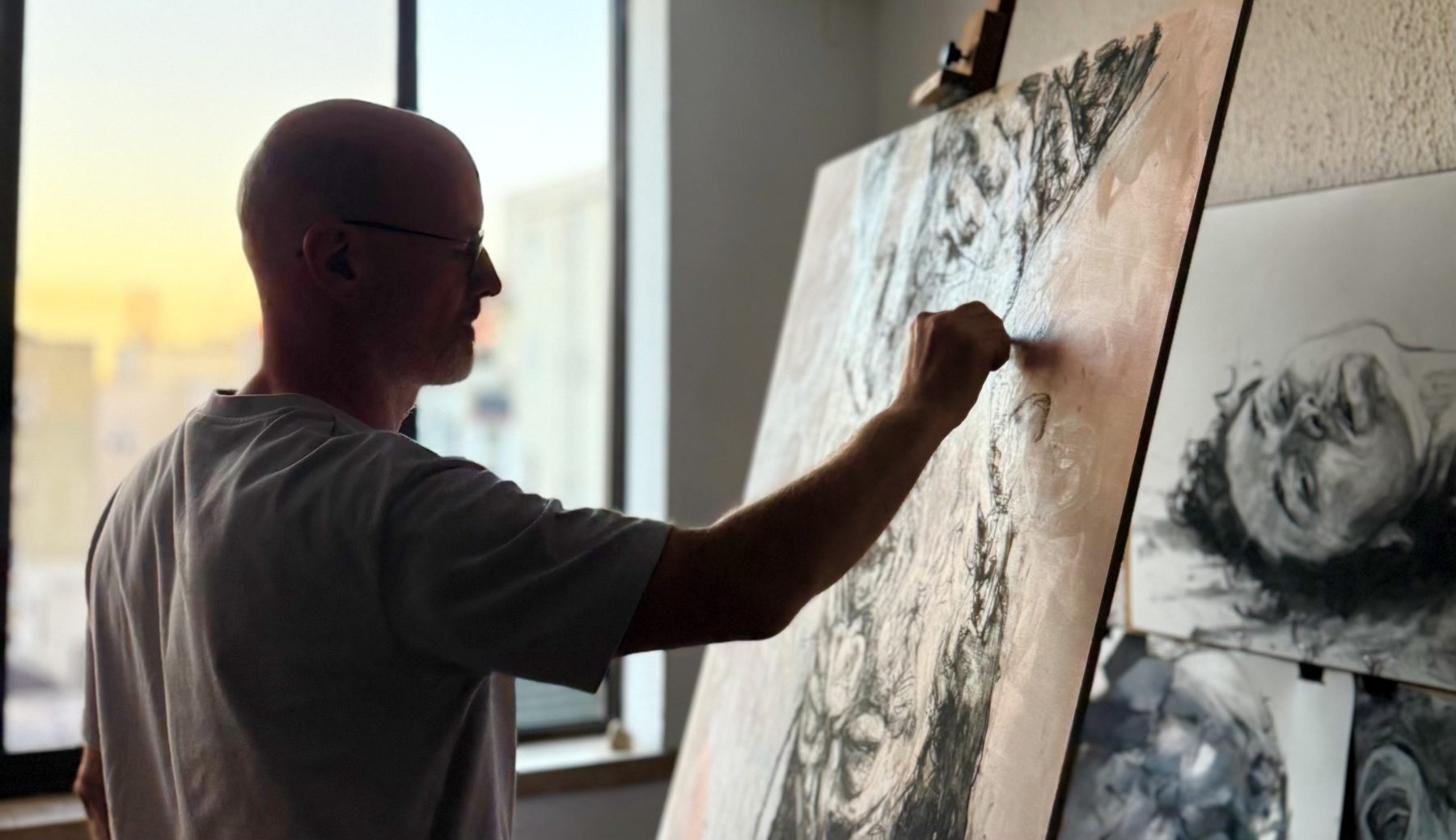
A few years ago I relocated to Portugal and have worked online ever since. I finally have a dedicated studio space where I go to draw and paint. I have an album of guitar songs that is taking me forever to complete, and I continue to enjoy contact improvisation and other forms of movement-based somatic research.
For those interested in my clinical work experience, here’s a timeline of my key roles.
Study and practice in Buddhist meditation and philosophy.
Annual weeklong (or longer) silent meditation retreats with various teachers from the Thai Forest, Tibetan, and Western Insight Meditation traditions. A three-month personal retreat at Gaia House in 2006.
Practice-study programmes including The Foundation of Buddhist Thought with Geshe Tashi, Jamyang London; the Committed Practitioners Programme, and Dharma Teacher Training Programme with The Bodhi College; and Rob Burbea’s Soulmaking Dharma with Catherine McGee.